SPARTATHLON HISTORY: FROM AN RAF EXPEDITION TO THE 246K RACE TO SPARTA
Spartathlon covers 246 kilometers from Athens to Sparta in a single push, with a 36-hour limit and 75 checkpoints that each close on a fixed schedule. The race has been held every year since 1983, with the exception of 2020, and the 2026 edition on September 26 will be the 43rd.
It has no prize money. The reward at the finish is a laurel wreath, a cup of water from the Evrotas river, and a place at the foot of the statue of Leonidas.
The Legend
The race retraces the route attributed to Pheidippides, the Athenian messenger sent to Sparta in 490 BC to request help before the battle of Marathon. According to Herodotus, he arrived the day after he left.
For centuries that account was treated as literary embellishment. The distance and the terrain between the two cities made a run of roughly a day and a half seem implausible.
The 1982 Expedition
John Foden, a British Royal Air Force officer and long distance runner, decided to test the story. In 1982 he led a group of five RAF officers from Athens toward Sparta on foot, following the most likely ancient route.
Three of them made it. John Scholtens arrived first in 34:30, Foden finished in 37:37, and John McCarthy completed the distance in 39:00. All three had covered the ground in under 40 hours, which put the Herodotus account within reach of a trained runner.
The First Race
The success of the expedition led directly to an organized event. Michael Callaghan and a group of supporters based at the British Hellenic Chamber of Commerce put together the first Spartathlon in 1983. The field consisted of 44 men and one woman from 12 countries.
The winner was a then-unknown Greek runner named Yiannis Kouros, who finished in 21:53:42. The margin and the time were so far beyond expectations that some observers doubted the result, and Kouros returned in 1984 to answer them with a 20:25:00. That mark stood as the course record for 39 years.
Eleanor Robinson of the United Kingdom was the only woman in the 1983 field and finished in 32:37:52, making her the first women's champion. The International Spartathlon Association was founded in 1984 to run the race on a permanent basis, and it has organized every edition since.
The Kouros Era
Kouros won four times, in 1983, 1984, 1986 and 1990. His 1990 winning time of 20:29:04 was the second-fastest in the race's history for more than three decades. Nobody else broke 21 hours until 2022.
The women's race in the 1980s was dominated by Mary Hanudel of the United States, who won in 1984, 1985, 1986 and 1989. She later competed as Mary Larsson after marrying Sweden's Rune Larsson, himself a three-time men's winner in 1987, 1988 and 1993, and added a fifth title in 1998 in 28:46:58. Her five wins remain the most by any woman.
Patrick Macke of the United Kingdom won in 1985 and 1989. Britain's Hilary Walker won the women's race in 1987 and 1992, both times in 31:23:30.
The 1990s and 2000s
Winners in the 1990s came from across Europe. János Bogár of Hungary won in 1991, Rusko Kadiev of Bulgaria in 1992, and James Zarei of the United Kingdom in 1994 and 1995. Greece's Constantinos Reppos won in 1997 and 1998.
Germany's Helga Backhaus won four consecutive women's titles from 1994 to 1997, with a best of 29:33:00 in 1995. Jens Lukas of Germany won the men's race in 1999, 2004 and 2005.
Japanese runners made their mark in the 2000s. Masayuki Ohtaki won in 2000, Ryōichi Sekiya in 2002 and 2009, and on the women's side Sumie Inagaki won in 2006 and 2009, running 27:39:49 in her second victory. Akiko Sakamoto won in 2003 and 2007.
The most recognizable name of the period was Scott Jurek. The American won three straight races from 2006 to 2008, with times of 22:52:18, 23:12:14 and 22:20:01. His 2008 run was the fastest since Kouros.
Cudin, Lubics and the Hungarian Decade
Ivan Cudin of Italy won in 2010, 2011 and 2014, and his 22:27:57 in 2014 was the quickest time of the decade to that point. Szilvia Lubics of Hungary won the women's race three times in four years, in 2011, 2013 and 2014, and her 26:53:40 in 2014 was then the second-fastest women's time in the race's history.
Lizzy Hawker of the United Kingdom won the 2012 women's race in 27:02:17, a year in which heat slowed the men's field and Stefan Thoms of Germany won in 26:28:19.
The women's record then fell twice in two years. Katalin Nagy of the United States ran 25:06:05 to win in 2015 and defended her title in 2016. In 2017, Poland's Patrycja Bereznowska became the first woman under 25 hours with a 24:48:18. That same year, Aleksandr Sorokin of Lithuania won the men's race in 22:04:04, and a record 264 runners finished inside the cutoff.
In 2018, the tail of Medicane Zorbas swept across the Peloponnese during the second half of the race. Yoshihiko Ishikawa of Japan won in 22:55:13 and Zsuzsanna Maraz of Hungary won the women's race. Maraz repeated in 2019, when Tamás Bódis made it a Hungarian double.
Zisimopoulos and Herron
The 2020 race was cancelled because of the pandemic. When it resumed in 2021, a new era began with Fotis Zisimopoulos. The Greek runner won in 21:57:36, then returned in 2022 and ran 21:00:59, the first sub-21 since Kouros.
In 2023 he went further. Zisimopoulos finished in 19:55, the first time anyone had covered the course in under 20 hours, and finally erased Kouros's 1984 record. He won a fourth consecutive title in 2024 in 20:18:43, matching Kouros's record of four victories.
The 2023 women's race was equally significant. Camille Herron of the United States finished third overall in a time just over 22 hours 35 minutes, becoming the first woman to break 24 hours and taking more than two hours off Bereznowska's record.
Diana Dzaviza of Latvia won the women's race in 2021 and 2022. Noora Honkala of Finland won in 2024, and in 2025 Hungary's Andrea Mórocza won in 25:09:06 while Radek Brunner of the Czech Republic won the men's race in 21:24:35, ending Zisimopoulos's streak.
The Record Progressions
Only three men have ever held the course record. Kouros set it at 21:53:42 in 1983, lowered it to 20:25:00 a year later, and then nobody touched it for 39 years until Zisimopoulos ran 19:55 in 2023. Every other men's winner in between, including Jurek, Cudin and Sorokin, finished outside Kouros's mark.
The women's record has moved far more often. Robinson's 32:37:52 in 1983 fell to Hanudel's 30:27:00 the following year. Backhaus brought it under 30 hours with 29:33:00 in 1995, and Larsson's 28:46:58 in 1998 lowered it again.
Russia's Irina Reutovich ran 28:10:48 in 2002, Inagaki took it to 27:39:49 in 2009 and Hawker to 27:02:17 in 2012. Lubics's 26:53:40, Nagy's 25:06:05 and Bereznowska's 24:48:18 followed in quick succession before Herron's 2023 run moved the mark by more than two hours in a single race.
Nations at the Front
Greece has produced 10 men's wins from three runners: Kouros, Reppos and Zisimopoulos. Hungary has been the strongest nation of the past 15 years, with Lubics, Maraz, Bódis and Mórocza all winning since 2011 and Lőw's streak adding depth behind them.
The United States has 10 titles across both races, from Hanudel's four in the 1980s to Jurek's three, Nagy's two and Herron's record. Japan produced seven different winners and 11 titles between 2000 and 2018, and Germany has claimed 11 titles through Backhaus, Lukas, Thoms, Florian Reus, who won in 2015, and others.
The Route
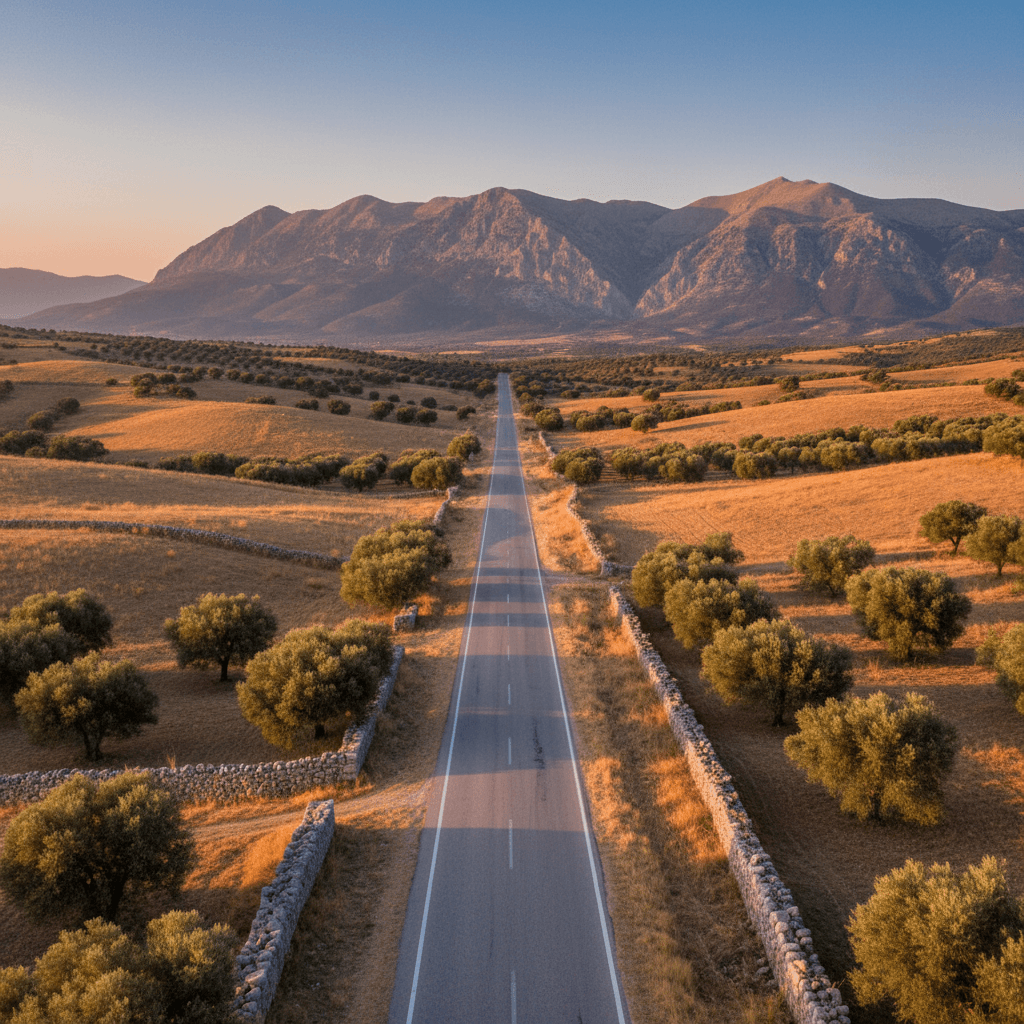
The race starts at 7:00 in the morning at the foot of the Acropolis. Runners leave Athens westward along the coast toward Corinth, reaching the canal at the 80-kilometer mark. The road then turns inland across the Peloponnese through Nemea and toward the mountains of Arcadia.
The defining section comes at night. Around 160 kilometers in, the course leaves the road and climbs Mount Parthenion over the Sangas pass at roughly 1,200 meters, a rocky footpath that most runners reach in darkness. The descent leads to Nestani at 172 kilometers, a checkpoint used as one of the qualifying standards for future entries.
From Tegea, near 200 kilometers, the final 50 kilometers run mostly downhill into Sparta. The finish is the statue of Leonidas, where finishers are crowned with olive leaves and given water from the Evrotas.
Entry and Cutoffs
The field is capped at 400 runners. To be eligible, a runner must have covered at least 100 kilometers in under 10 hours for men or 10:30 for women, or 200 kilometers in under 29 hours for men or 30 for women, or have reached Nestani in a previous Spartathlon in under 24:30. Athletes who exceed a standard by 25 percent qualify automatically, and the remaining places are filled by lottery.
The 75 checkpoints each carry a closing time, and runners who arrive late are pulled from the race. The cutoffs are the main reason the finish rate is often below half of the field, even among runners who have already met the qualifying standard.
The race has also produced some of the longest streaks in ultrarunning. Hubert Karl of Germany has finished 25 times, the most of anyone. András Lőw of Hungary completed 19 consecutive editions.
The 2026 Edition
The 43rd running starts in Athens on September 26, 2026. Zisimopoulos's 19:55 and Herron's sub-23 hour run are the marks that define the modern race, and Brunner's 2025 win opened the men's field for the first time in five years.