2026 SPARTATHLON PREVIEW: ZISIMOPOULOS RETURNS, AND THE WOMEN'S RACE IS WIDE OPEN
The 44th Spartathlon starts at 7:00 a.m. on Saturday, September 26, at the foot of the Acropolis in Athens, and Fotis Zisimopoulos, who won four straight editions from 2021 to 2024 and holds the course record of 19:55:09, is on the participation list. The 246-kilometer run to Sparta must be completed inside 36 hours.
Zisimopoulos Returns
The Greek runner's streak ended in 2025, when Radek Brunner of the Czech Republic won in 21:24:35. Brunner does not appear on the 2026 participation list, and neither does last year's women's winner, Andrea Mórocza of Hungary, who won in 25:09:06.
Zisimopoulos' record of 19:55:09, set in 2023, is the only sub-20-hour finish in the race's history. His other winning times were 21:57:36 in 2021, 21:00:59 in 2022 and 20:18:43 in 2024. Between 2010 and 2019 no winner broke 22 hours, and the fastest winning time of that decade was Aleksandr Sorokin's 22:04:00 in 2017.
The other former winner on the list is Tamas Bodis of Hungary, who won in 2019 in 23:28:37. Sorokin, Yoshihiko Ishikawa, the 2018 winner, and Patrycja Bereznowska, the 2017 women's winner, are not entered.
The Women's Race
With Mórocza absent, the women's race has no obvious favorite from the recent winners' list. Noora Honkala of Finland, who won in 2024 in 24:25:08, and Camille Herron of the United States, whose 22:35:31 from 2023 is the women's course record, are not on the participation list either.
Herron's record was the first women's finish under 24 hours at Spartathlon, and it came in the same year as Zisimopoulos' men's record. Before her, the women's winning times had ranged between 24:48:18 and 30:17:03 over the previous decade.
Diana Dzaviza of Latvia won twice, in 2021 and 2022, and Zsuzsanna Maraz of Hungary won in 2018 and 2019, but neither is entered. That leaves the women's race open to a first-time winner unless a returning podium finisher from previous years emerges from a field of roughly 400.
The Field
The participation list runs to about 400 runners from more than 50 countries, selected through a lottery held in March. Germany, Italy, Japan, the United States, the United Kingdom, Hungary and Greece are among the largest national groups, and the race's ambassador program this year is fronted by Dean Karnazes.
Entry requires a qualifying performance, which keeps the field experienced. Even so, the cutoffs at the 75 checkpoints are enforced strictly from the first hours, and a large share of the field is timed out before Sparta every year.
The Course
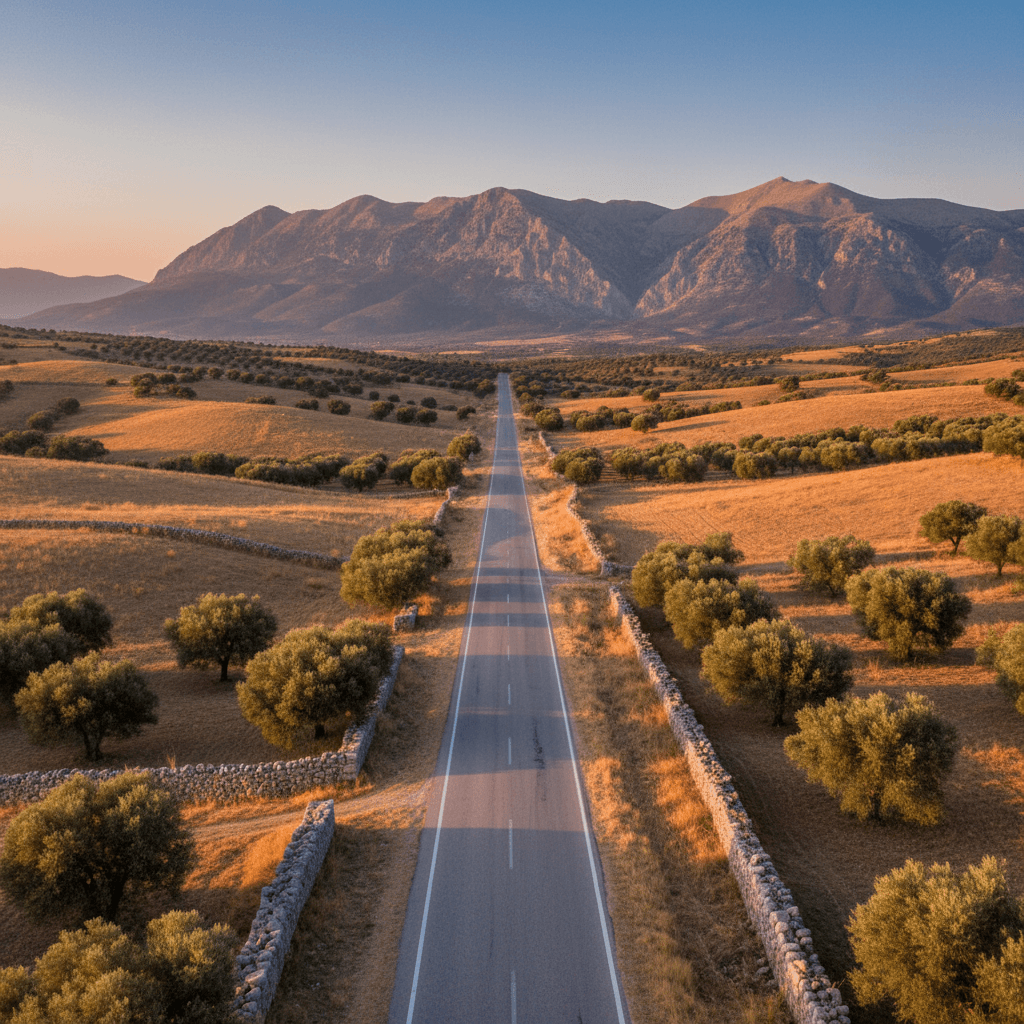
The route follows the path attributed to Pheidippides, who according to Herodotus ran from Athens to Sparta in 490 BC to seek help before the Battle of Marathon. It leaves the Acropolis and follows roads west along the coast toward Corinth, then turns inland through the Peloponnese.
The defining section comes overnight. At around 160 kilometers the course climbs Mount Parthenio to about 1,200 meters on a rocky footpath, usually in darkness and often in wind or rain. The descent leads through Nestani and on toward Tegea and the final road into Sparta, where the race ends at the statue of Leonidas.
Late September in Greece typically starts hot on exposed roads and cools sharply on the mountain. Total climbing is about 2,500 meters, modest for the distance, but the combination of heat, hard surfaces and the mountain crossing at the point of greatest fatigue makes the 36-hour limit demanding.
What to Watch
If Zisimopoulos starts, the question is whether he can approach his own record. His four winning times spanned two hours, and the 2023 run came on a day with favorable conditions. A fifth title would be the most by any runner in the race's history, one more than Yiannis Kouros.
For the women, the absence of every winner since 2018 means the winner will almost certainly be new to the top step. Only three women have finished inside 25 hours in the last decade: Herron, Honkala and Bereznowska.
Our Spartathlon history covers the 1982 expedition that proved the run was possible and the race's growth since 1983. The race is followed live through the organizers' tracking page, and the leaders are expected in Sparta in the early hours of Sunday.