THE HORSE RACE THAT STARTED IT ALL: A HISTORY OF WESTERN STATES 100
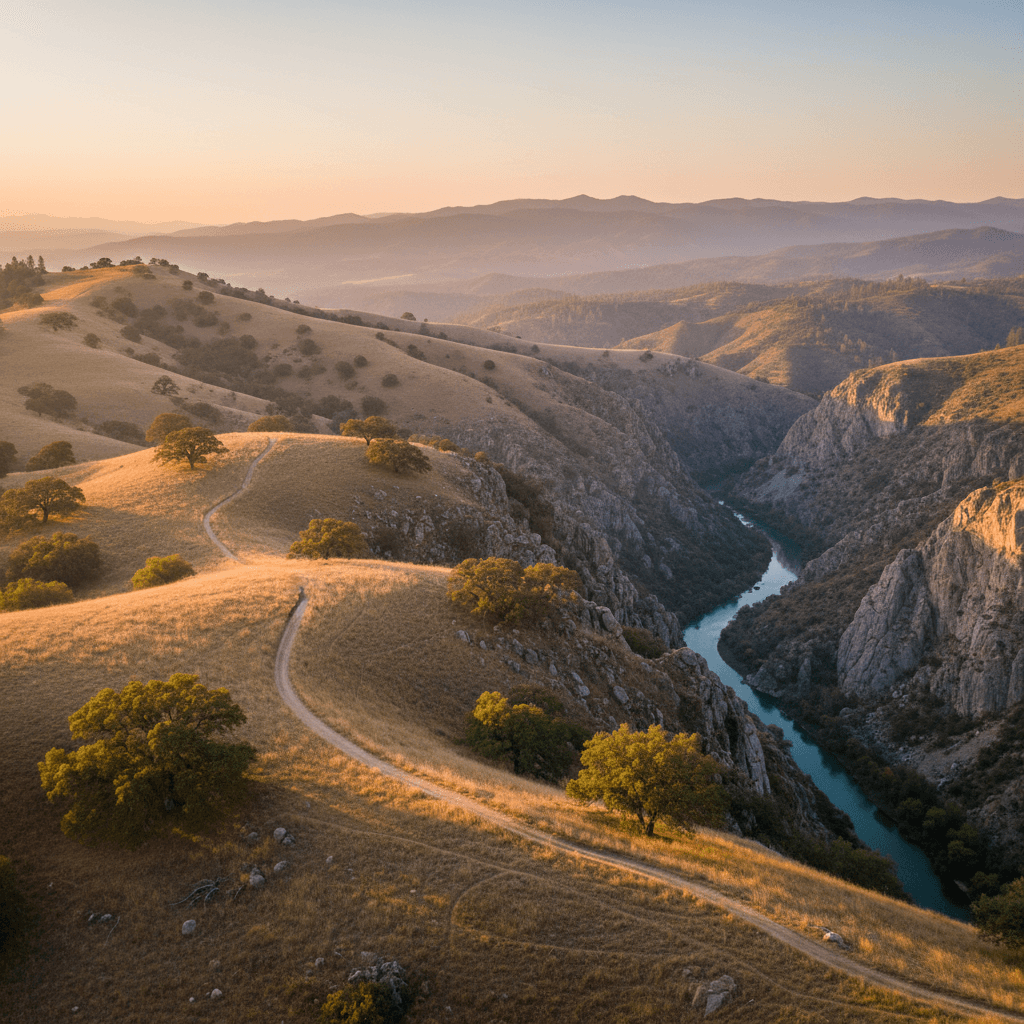
On August 3, 1974, Gordy Ainsleigh lined up alongside 198 horses at the start of the Western States Trail Ride, known as the Tevis Cup. Ainsleigh was not on a horse. His horse had gone lame the year before, and he wanted to see if he could cover the 100 miles from Squaw Valley to Auburn, California, on foot within the ride's 24-hour cutoff. Twenty-three hours and 42 minutes later, he arrived in Auburn, sunburned and battered, having proven something that no one had thought to test.
That single act of stubbornness created the Western States Endurance Run, the oldest and most prestigious 100-mile trail race in the world. Fifty years later, the lottery to enter Western States is harder to win than most of the ultras that serve as its qualifiers. The race has not changed much. The mountains have not gotten shorter. The canyons have not gotten cooler. That is precisely the point.
From Horse Trail to Footrace
The Tevis Cup, formally the Western States Trail Ride, had been running since 1955 along a route originally used by gold miners, Native Americans, and mail carriers. The trail ran from Tahoe City (later Squaw Valley, now Palisades Tahoe) to Auburn, crossing the Sierra Nevada through river canyons and exposed ridgelines.
Drucilla Barner, the first woman to win the Tevis Cup and secretary of the Western States Trail Foundation, encouraged Ainsleigh's attempt. His successful run inspired others. In 1977, 14 runners from four states lined up for the first official Western States Endurance Run. Three finished. Andy Gonzales, age 22, won in 22:57.
The 1978 race expanded to 63 entrants, including five women. Pat Smythe became the first official women's finisher and winner in 29:24. By the early 1980s, the race had grown into the defining event of the nascent ultrarunning movement.
The Course: 100 Miles Through the Sierra
Western States covers 100.2 miles from the start at Palisades Tahoe (elevation 6,200 feet) to the finish at Placer High School in Auburn (elevation 1,200 feet). The course gains approximately 18,000 feet and descends roughly 23,000 feet, with the net downhill creating its own form of punishment on the quads.
The first 30 miles climb through snow-covered passes, including Emigrant Pass at 8,750 feet, the course's high point. Runners then descend into a series of river canyons, including the notorious canyons of the American River system, where temperatures regularly exceed 100 degrees Fahrenheit in late June.
The contrast is the race's signature challenge. Runners cross snowfields at dawn and bake in triple-digit heat by afternoon. The technical footing ranges from rocky single-track to river crossings (the knee-deep ford of the American River at Rucky Chucky is a mandatory checkpoint). Twenty-three aid stations dot the course, staffed by volunteers who have been working Western States for decades.
The 30-hour cutoff is generous by elite standards but punishing for the majority of the field. Runners must pass through intermediate time cutoffs at Robinson Flat (mile 30), Michigan Bluff (mile 55), and Foresthill (mile 62) to continue.
The Champions
Jim King set the first official course record on the measured course at 16:02, a mark that stood until 1991. But the names that defined Western States through the 1980s and 1990s were the athletes who came back year after year.
Ann Trason dominated the women's race with 14 victories between 1989 and 2003, a record that may never be matched in any ultra. Trason was not just winning the women's race; she was frequently finishing in the overall top five. Her 1994 winning time of 18:06:24 set a women's course record that stood for more than two decades.
Tim Twietmeyer won five times and finished Western States 25 times. His consistency across decades made him the face of the race's everyman ethos: Western States was not just about winning but about the relationship between a runner and a specific 100-mile stretch of trail.
Scott Jurek brought a new level of visibility to the race with seven consecutive victories from 1999 to 2005. Jurek, a vegan ultrarunner from Minnesota, became the sport's first crossover personality, and his dominance at Western States was central to his story.
The Modern Era and Walmsley
The race entered a new phase when Jim Walmsley arrived. Walmsley ran his first Western States in 2016 and promptly went off course near mile 93, costing himself what appeared to be a winning position. He returned in 2017, blew through the early miles at a reckless pace, and collapsed with cramps in the canyons.
In 2018, Walmsley finally got it right. He won in 14:30:04, breaking the course record by more than 15 minutes. He lowered it further in 2019 with a 14:09:28. Then, in 2023, he ran 14:00:54, flirting with the 14-hour barrier that had once seemed as symbolic in ultrarunning as the four-minute mile had been in track.
Walmsley's approach, aggressive from the gun, relying on fitness rather than conservation, represented a philosophical shift. The old Western States wisdom was to survive the canyons and race the final 38 miles. Walmsley treated it as a 100-mile time trial.
Courtney Dauwalter and the Women's Race
Courtney Dauwalter won Western States in 2018 and 2023, bringing the same fearless approach to the women's race that she later carried to the Tahoe 200, the Sierra Nevada race that pioneered the 200-mile distance. Her 2023 time of 15:29:34 set a new women's course record, smashing Trason's long-standing mark.
Ellie Greenwood of Great Britain had previously reset the women's record with her 2012 run of 16:47:36. The progression from Trason to Greenwood to Dauwalter mirrored the men's evolution: the sport was getting faster, the athletes more professional, the performances more extreme.
The Lottery and the Culture
Western States caps its field at 369 runners. With thousands of qualified applicants each year, entry is determined by a weighted lottery system. Runners earn tickets based on how many consecutive years they have entered without being selected, with the odds improving over time. Some runners wait five or more years for their name to be drawn.
The scarcity is deliberate. Western States has resisted the pressure to expand that other ultras have embraced. The race director, the board, and the volunteer corps believe that the intimate scale is essential to the experience. The trail cannot support thousands of runners without environmental damage, and the aid station infrastructure relies on a community of volunteers who know the course by heart.
The 2008 race was cancelled due to wildfires, one of the few cancellations in the event's history. The fire risk is a constant concern in late June in the Sierra Nevada, and the race has contingency plans for smoke and fire that have been tested more frequently in recent years.
What Western States Means
Every ultrarunning culture has a creation myth, and Western States is American ultrarunning's origin story. Ainsleigh running alongside horses in 1974. Trason winning 14 times. Jurek's seven-year reign. Walmsley's course-record obsession. Dauwalter finishing ahead of nearly everyone.
The race has never offered prize money (though that changed recently with modest awards). It has never been livestreamed with the production values of UTMB. It does not have a global qualifying series or a corporate title sponsor. It has a trail, a 30-hour clock, and a community of runners who believe that 100 miles through the Sierra Nevada in June is the truest test in the sport.
Gordy Ainsleigh still runs. He has finished Western States more than 20 times since that first horse-less attempt in 1974. The trail from Squaw Valley to Auburn has not changed much. Neither has the question it asks: can you cover 100 miles through the mountains before the clock runs out? For 50 years, people have been showing up to answer.
One of the most defining recent moments came at mile 93 in 2016, when Jim Walmsley made the wrong turn that reshaped his career.